
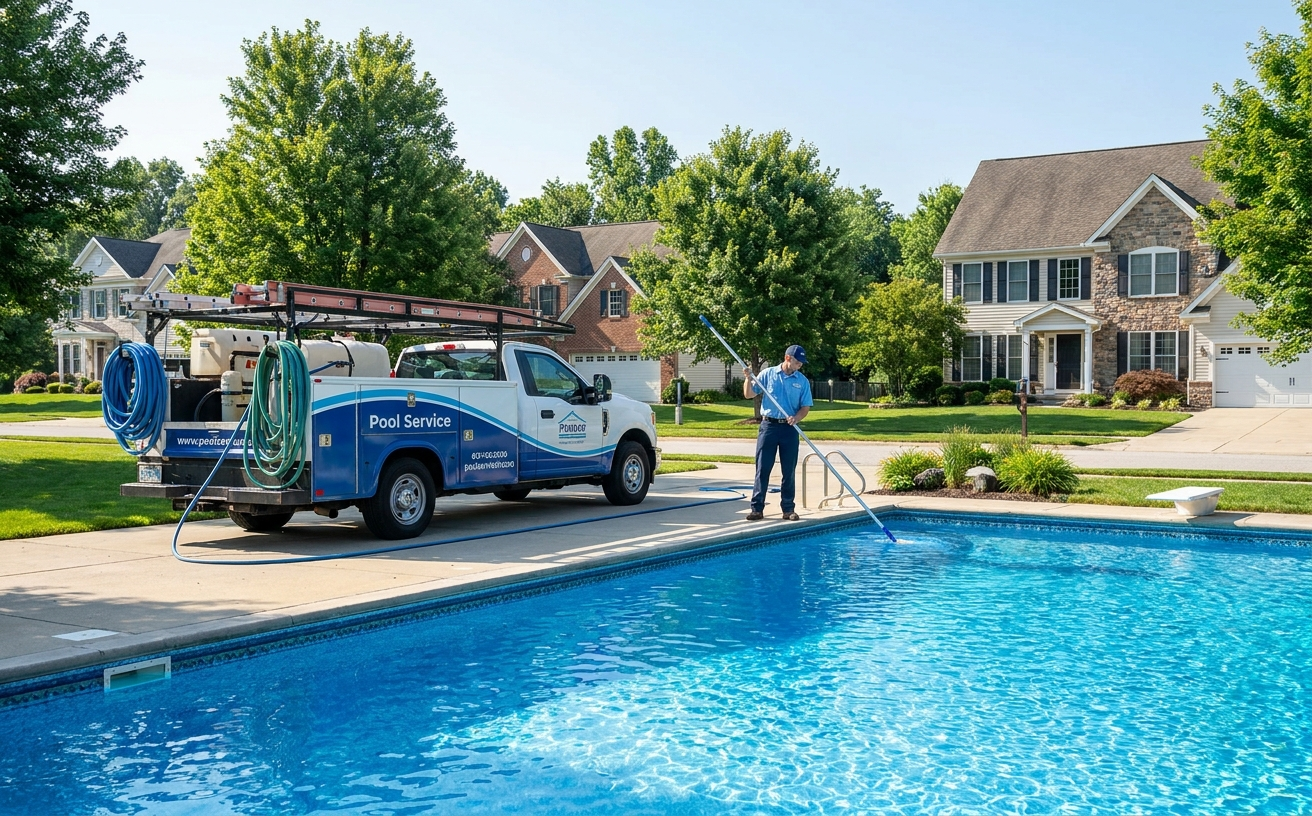
Hiring a pool service is the default solution for owners who do not want to maintain their own pool. The service sends a technician once per week, the pool stays clean, and the owner writes a check. It works. The question is whether it works economically over the long term compared to owning a cleaning device.
The comparison depends on what the service provides, what it costs, and what the owner still has to do themselves. In many cases, the service handles only part of the maintenance, and the owner handles the rest. Understanding the overlap helps determine where a machine can replace the service and where it cannot.
What Weekly Services Typically Include
A standard weekly pool service includes vacuuming, skimming, brush cleaning, chemical testing, and chemical adjustment. The technician vacuums the floor, skims the surface, brushes the walls and waterline, tests the water, and adds whatever chemicals are needed to bring the water into balance.
The visit typically takes twenty to thirty minutes for a standard residential pool. The cost ranges from seventy-five to one hundred fifty dollars per visit, depending on the region and the pool size. At the national average of one hundred dollars per visit, the annual cost for weekly service is approximately five thousand two hundred dollars.
This is the baseline cost that any alternative must beat. A cleaning device that costs eight hundred to fifteen hundred dollars and lasts three to five years represents a significant savings over five thousand dollars per year in service fees.
What the Service Does Not Cover
Weekly service visits do not address problems that arise between visits. If a storm deposits a load of debris on Tuesday, the debris sits until the next scheduled visit. If the chlorine drops to zero on Wednesday, the pool runs without sanitizer until the technician returns. If algae begins to grow on Thursday, it has three days to establish before anyone treats it.
These between-visit problems are precisely the ones that a robotic pool cleaner prevents. The machine removes debris daily, before it decomposes. It scrubs walls regularly, before algae establishes. The physical maintenance happens three to five times per week instead of once.
Chemical management remains the owner’s responsibility between service visits, unless the owner contracts for additional chemical-only visits, which cost extra. Most weekly service contracts include chemical adjustment only during the scheduled visit.
The Hybrid Approach: Machine Plus Chemical Service
A practical middle ground combines a cleaning device with a chemical-only service. The machine handles debris removal and wall scrubbing. The service handles chemical testing and adjustment. This approach costs less than full service while providing more frequent physical cleaning.
A chemical-only service visit takes five to ten minutes and costs thirty to fifty dollars per visit. At twice per month, the annual cost is seven hundred twenty to one thousand two hundred dollars. Combined with a cleaning device that costs one thousand dollars amortized over four years — two hundred fifty dollars per year — the total annual cost is nine hundred seventy to one thousand four hundred fifty dollars.
Compared to five thousand two hundred dollars for full weekly service, the hybrid approach saves three thousand seven hundred fifty to four thousand two hundred thirty dollars per year. Over four years, the savings range from fifteen thousand to nearly seventeen thousand dollars.
What You Give Up by Replacing the Service
A service technician does more than clean. They observe the equipment and can identify developing problems — a pump making an unusual noise, a filter that needs replacement, a fitting that is beginning to leak. This observational role is valuable because it catches problems early, before they become expensive repairs.
A cleaning machine does not observe or report. It cleans the pool and nothing else. Owners who replace a full service with a machine must take responsibility for periodic equipment inspection themselves, or contract separately for a quarterly equipment check.
The technician also provides expertise. When the water turns green, the technician knows why and how to fix it. When the filter pressure spikes, the technician diagnoses the cause. This expertise has value that a machine cannot replace, particularly for owners who are not confident in their own diagnostic abilities.
The Decision Framework
Choose full service if you want zero involvement in pool maintenance and are willing to pay for the convenience. Choose a machine if you are comfortable testing chemistry and making occasional adjustments, and want to save thousands of dollars per year. Choose the hybrid if you want professional chemical management without paying for physical cleaning that a machine can do better and more frequently.
The financial case for a cleaning device over full service is strong. The device pays for itself within three to four months of service fees and then generates net savings for the remainder of its useful life. The non-financial factors — expertise, observation, and convenience — determine whether the savings are worth the trade-off for each individual owner.
Pool service is valuable. A cleaning device is also valuable. They are not mutually exclusive, and the best solution for most owners is a combination that matches their budget, their time, and their comfort level with pool chemistry. The machine handles the daily physical maintenance. The service or the owner handles everything else. The pool stays clean, and the checkbook stays thicker.