
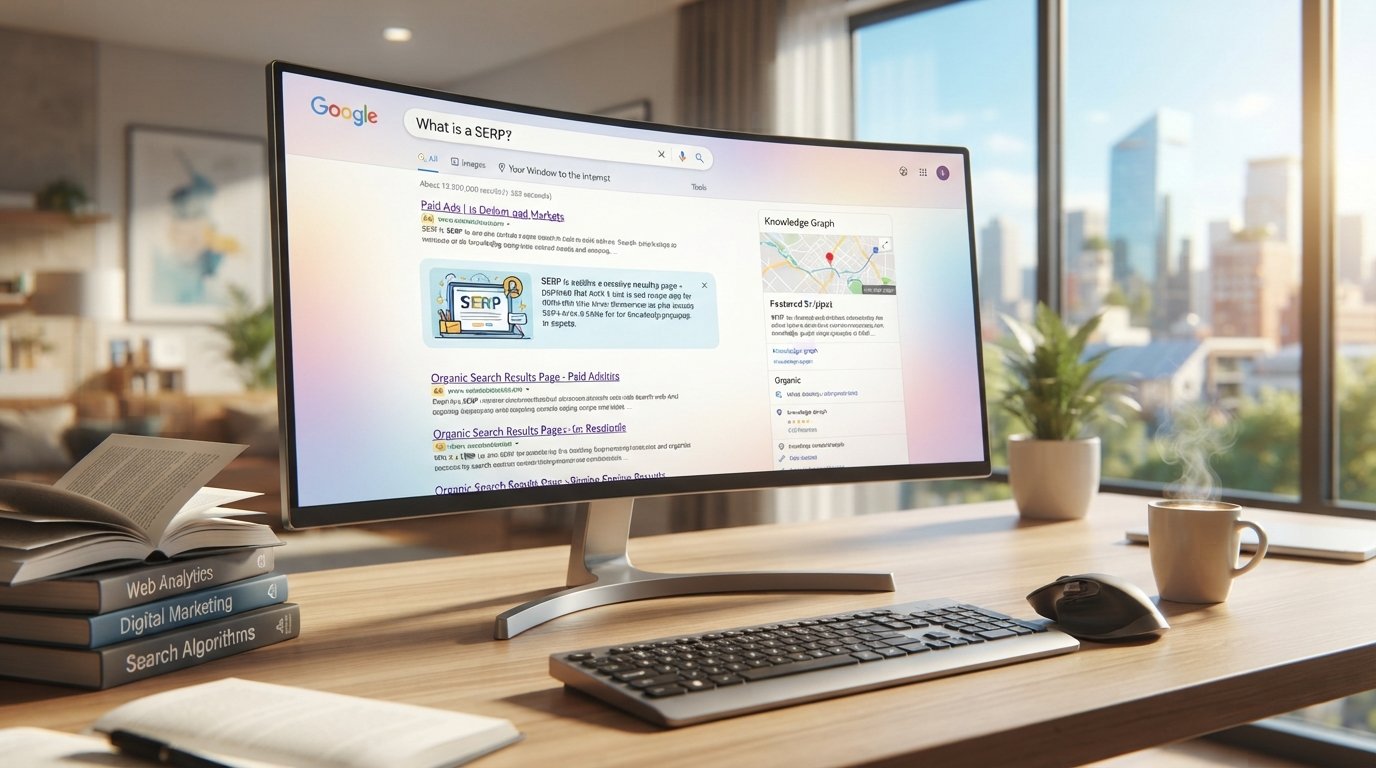
Learn what is a SERP, discover exciting serp features, and master serp monitoring with our easy, beginner-friendly guide to search engines.
Have you ever typed a question into Google and hit enter? The page that pops up right after is a magical place called a SERP. If you have ever wondered what does serp stand for, it simply means Search Engine Results Page. It is the exact page you see when you look for answers, pictures, or videos online. Think of it as a giant digital bulletin board. Every time you ask a question, the search engine runs around the internet to find the best possible answers for you. It then pins those answers neatly onto this special page in a matter of milliseconds.
Understanding how this page works is super important for anyone who wants to share cool ideas online. When you search for your favorite video game or a recipe for chocolate chip cookies, the list you look at is your SERP. It is not just a boring list of blue website links anymore. Today, it is packed with colorful pictures, instant answers, and fun videos. Learning the serp meaning helps you understand how computers sort through billions of pages to bring you the exact thing you need right away. Let us dive in and explore this amazing digital world together!
Decoding the Acronym: What Does SERP Stand For?
Let us break down the exact words behind our favorite acronym. When people ask what does serp stand for, the answer is Search Engine Results Page. Every single word in that name tells a fun story about how the internet works. First, we have Search. This is what you do when you are curious about dinosaurs, space, or how to build a LEGO castle. You are hunting for hidden knowledge! Next is Engine. This is not a motor in a car; it is a super smart computer brain that does all the heavy lifting behind the scenes to find your treasures.
Finally, we have Results Page. This is the final canvas where all the hard work shows up for your eyes to see. Imagine walking into a giant library where a super-fast robot finds every book about your favorite topic and lays them out on a table for you. That is precisely what a SERP does for you every single day. Knowing what these words mean makes you feel like a real internet wizard. You no longer just look at a screen; you understand the cool science happening behind the glass. It is like peeking behind the curtains of a magic show!
The Basics: What is a SERP and Why Does It Matter?
If you are just starting your journey into website building, you might ask, what is a SERP in simple terms? It is simply the page you look at after typing words into a search box. But why should you care about it? Well, imagine you opened a brand new ice cream shop in town. If your shop is hidden down a dark alley, nobody will buy your treats. You want your shop right on the main street where everyone can see it. On the internet, a SERP is that busy main street!
When your website shows up on a SERP, real people can click on it, read your stories, and play your games. If your page is hidden on page ten, nobody will ever find it. That is why digital creators care so much about climbing to the top spot. Every single SERP is different for every person, depending on what they type and where they live. If you search for “funny cats” in New York, you might see different results than your friend in Tokyo. Understanding this helps you see how search engines try their best to give every single user the exact answer they want instantly.
Exploring Fun and Helpful SERP Features
Gone are the days when a SERP was just a boring list of ten blue website links. Today, a modern SERP is bursting with exciting visual boxes called serp features. What is a serp feature exactly? It is any special box or extra element on the page that is not a standard organic search result. For example, have you ever typed in a math question and seen the answer pop up in a big highlighted box before you even click anything? That is a special serp feature designed to save you time!
Other fun serp features include picture carousels showing cute puppies, map packs showing local pizza places near your house, and video boxes with play buttons. These serp features make browsing the internet much more colorful and interactive. As a content creator, seeing these special boxes on a SERP is like finding hidden treasure chests. They grab the reader’s attention much faster than plain text ever could. Knowing how these features work gives you a superpower when you want your own web pages to stand out from the crowd.
Unlocking Opportunities: How to Find SERP Features Opportunities
If you want your website to shine like a star, you need to know how to find serp features opportunities. But how do you actually do that? It is a lot like going on an Easter egg hunt! First, you need to type your favorite topic into a search engine and look closely at the SERP. Do you see a list of questions people frequently ask? Do you see a video box or a local map? Those are the exact spots you want to target with your own content.
To capture these special serp features opportunities, you must write clear, helpful answers to common questions. For instance, if you write a blog post about baking brownies, include a step-by-step list with bullet points. Search engines love clean lists and will often grab them to display right at the top of the SERP. You can also use special helper tools to track which keywords trigger these visual boxes. By studying the SERP like a detective, you can create content that fits neatly into these valuable spots and brings happy visitors right to your door.
Keeping Watch: Why You Need SERP Monitoring
Imagine flying a spaceship without looking at your control dashboard. That sounds pretty scary, right? In the digital world, serp monitoring is your control dashboard. What is serp monitoring? It is the habit of regularly checking where your web pages rank on the SERP over time. Search engine rankings change constantly because new websites are published every single day and search rules get updated.
With proper serp monitoring, you will know immediately if your page climbs up to the number one spot or if it slips down a little bit. If you notice your ranking dropping on the SERP, you can quickly update your article with fresh, fun information to boost it back up. There are many handy digital tools that do this tracking automatically so you do not have to check manually every single morning. Staying on top of serp monitoring ensures your hard work keeps paying off and your website stays healthy, active, and visible to everyone.
Supercharging Your Strategy with a SERP API
For people who manage huge websites with thousands of pages, checking rankings manually is impossible. That is where a serp api comes to the rescue! A serp api is like a super-fast digital messenger. It connects your computer program directly to the search engine to pull live data about any SERP in seconds. Instead of clicking search buttons all day long, developers use a serp api to gather hundreds of ranking reports automatically while they sleep.
Using a serp api helps businesses track serp monitoring data at a massive scale. It tells them which serp features are showing up for their target keywords and how their competitors are performing on the SERP. While you might not need a complex serp api for a small personal blog, knowing that it exists helps you understand how big companies keep track of their online presence. It is a brilliant piece of technology that proves how data drives the modern internet behind the scenes.
Biography Table
| Name / Element | Description & Details |
| Search Engine (The Finder) | The smart computer algorithm that crawls the internet and collects information for every query. |
| SERP (The Results Page) | The final webpage displaying organic links, ads, and visual components after a user searches. |
| SERP Features | Extra visual elements like image packs, knowledge panels, and video carousels on the search page. |
| SERP API | A developer tool used to fetch live search engine result data automatically and programmatically. |
| SERP Monitoring | The routine practice of tracking ranking positions and visibility changes over a period of time. |
Frequently Asked Questions (FAQs)
What does SERP stand for?
SERP stands for Search Engine Results Page. It is the exact page you look at after typing a question into Google, Bing, or any other search engine.
Why is the SERP important for website owners?
The SERP is important because it is where potential visitors find your content. Ranking higher on the SERP brings more clicks and readers to your website.
What are some common examples of SERP features?
Common SERP features include instant answer boxes, local business maps, image carousels, video highlights, and “People Also Ask” dropdown sections.
How can I find SERP features opportunities for my blog?
You can find these opportunities by searching your target keywords manually, looking for visual boxes, and formatting your own content with clear lists and direct answers.
What is the main purpose of a SERP API?
A SERP API allows programmers and businesses to collect automated ranking data and search results quickly without needing to check pages by hand.
Is SERP monitoring difficult for beginners?
Not at all! Many user-friendly software tools handle the tracking for you, making serp monitoring simple and stress-free for new website creators.
Conclusion
We have explored the exciting universe of the SERP, from understanding what does serp stand for to discovering cool serp features and learning how serp monitoring keeps your website healthy. Navigating the internet becomes so much more fun when you know how search engines organize information for us. Whether you are building your very first blog or just curious about how computers work, mastering the serp meaning gives you a wonderful foundation. Remember to keep experimenting, write helpful content for your readers, and always keep an eye on the SERP to watch your ideas grow! What topic are you planning to search for and write about next?